

Screen Printing
The Complete Guide:
What is Screen Printing?
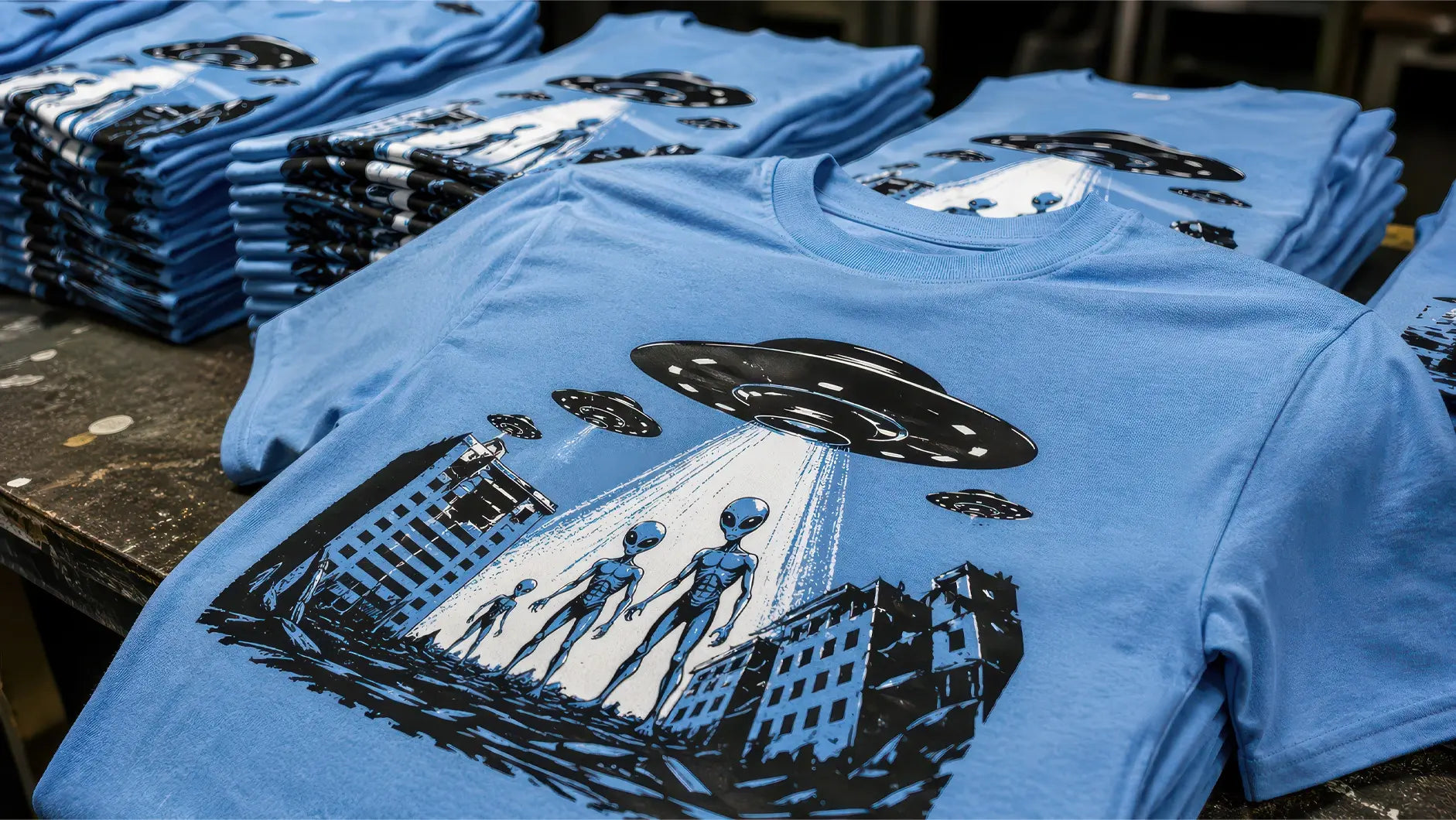
Screen printing is the standard for brands that want bold, consistent prints that hold up over time and scale cleanly. It’s one of the most trusted methods in the apparel industry because of its ability to deliver strong, high-opacity designs with unmatched consistency.
Instead of printing digitally, screen printing uses a stencil (or “screen”) to push ink directly onto the garment, layer by layer. Each color in a design is applied separately, resulting in a structured, vibrant print that sits confidently on top of the fabric.
If your brand relies on bold graphics, clean lines, or repeatable production, Screen printing is the method that ensures every piece looks the same—from the first print to the last.
How Screen Printing Works
The process is methodical and precise:
- A design is separated into individual colors
- Each color is burned onto a separate screen
- Ink is pushed through the screen onto the garment
- Layers are built one at a time
- The garment is cured with heat to lock in durability
Once the setup is complete, production becomes highly efficient, allowing for consistent results across large batches.
The Equipment and Process Behind It
Professional screen printing setups use specialized presses—manual or automatic—along with high-quality inks and curing systems. This ensures:
- Even ink distribution
- Accurate alignment
- Long-lasting adhesion
Every step is calibrated to maintain consistency and durability throughout the entire run.
Key Benefits of Screen Printing
Screen printing remains the go-to choice for brands that prioritize bold visuals and long-term reliability.
Bold, High-Opacity Prints
One of the biggest advantages is the richness of the ink. Screen printing produces:
- Deep, solid colors
- Crisp edges
- Strong contrast
This makes designs stand out instantly, especially on darker garments.
Consistency Across Large Runs
Once the setup is locked in, every print comes out nearly identical. This level of consistency is essential for:
- Full collections
- Merchandise drops
- Retail production
Long-Lasting Durability
Screen prints are known for their longevity. When properly cured, the ink bonds securely to the fabric, allowing prints to withstand repeated wear and washing.
Why Screen Printing is Ideal for Growing Brands
For brands looking to scale, Screen printing offers a reliable production method.
Perfect for Bulk Orders
Screen printing becomes more cost-effective as quantities increase. The more you print, the lower the cost per unit.
Reliable for Merch Drops
Consistency is key when releasing collections. Screen printing ensures every piece meets the same standard.
Scalable Production
Whether you’re producing 50 pieces or 5,000, screen printing maintains efficiency and quality at scale.
Screen Printing vs DTG and DTF
Understanding how screen printing compares to other methods helps you choose the right approach.
Print Feel and Texture
- Screen Printing: Structured, slightly raised feel
- DTG: Soft, embedded into fabric
- DTF: Flexible but sits on top
Design Capabilities
- Screen printing excels with bold, simple designs
- DTG handles detailed, multi-color artwork
- DTF offers versatility across materials
Best Use Cases
- Choose screen printing for bulk production and bold graphics
- Choose DTG for soft, detailed prints
- Choose DTF for versatility across fabrics
Fabric Compatibility and Limitations
Screen printing works best on certain materials.
Best Materials for Screen Printing
- 100% cotton
- Cotton blends
- Heavyweight garments
These fabrics allow for better ink adhesion and richer color output.
Color and Design Considerations
Screen printing performs best with:
- Limited color palettes
- Bold, intentional designs
- Clean shapes and lines
Complex gradients can be achieved, but they require more advanced techniques.
Durability and Longevity
Screen printing is built to last—but like any method, it evolves over time.
How Screen Prints Age Over Time
With regular wear and washing, prints may soften slightly, developing a subtle worn-in look that many brands and customers appreciate.
What Affects Print Lifespan
- Quality of ink and curing
- Fabric type
- Washing habits
When properly handled, screen prints maintain their integrity for years.
Cost Breakdown of Screen Printing
Setup Costs
Screen printing requires initial setup, including:
- Screen creation
- Color separation
- Press calibration
This makes small runs less cost-efficient.
Cost Per Unit in Bulk
Once setup is complete, the cost per piece drops significantly—making it ideal for large orders.
How to Get the Best Results with Screen Printing
Preparing Your Artwork
- Use vector files for clean edges
- Limit color count for efficiency
- Keep designs bold and clear
Choosing the Right Garments
High-quality blanks produce better results. Heavier fabrics often yield more consistent prints.
Common Misconceptions About Screen Printing
Is Screen Printing Outdated?
Not at all. It remains one of the most widely used and trusted printing methods in the industry.
Is It Only for Simple Designs?
While it excels at simplicity, advanced techniques can handle more complex designs when needed.
Environmental Considerations
Ink Types and Sustainability
Modern screen printing often uses water-based or eco-friendly inks to reduce environmental impact.
Waste and Efficiency
While setup can produce some waste, large runs maximize efficiency and reduce overall material usage per piece.
Conclusion
Screen printing continues to be the gold standard for brands that want bold, durable, and consistent apparel. It delivers strong visual impact, scales efficiently, and ensures every piece meets the same high standard.
If your goal is to produce garments that look sharp, last over time, and stay consistent from the first print to the last, Screen printing is the move. It’s not just a printing method—it’s a foundation for building a reliable, scalable clothing brand.
Ready to start your project? Contact us, were happy to help!
