

DTF – Direct to Film Printing
The Complete Guide:
What is DTF Direct to Film Printing?
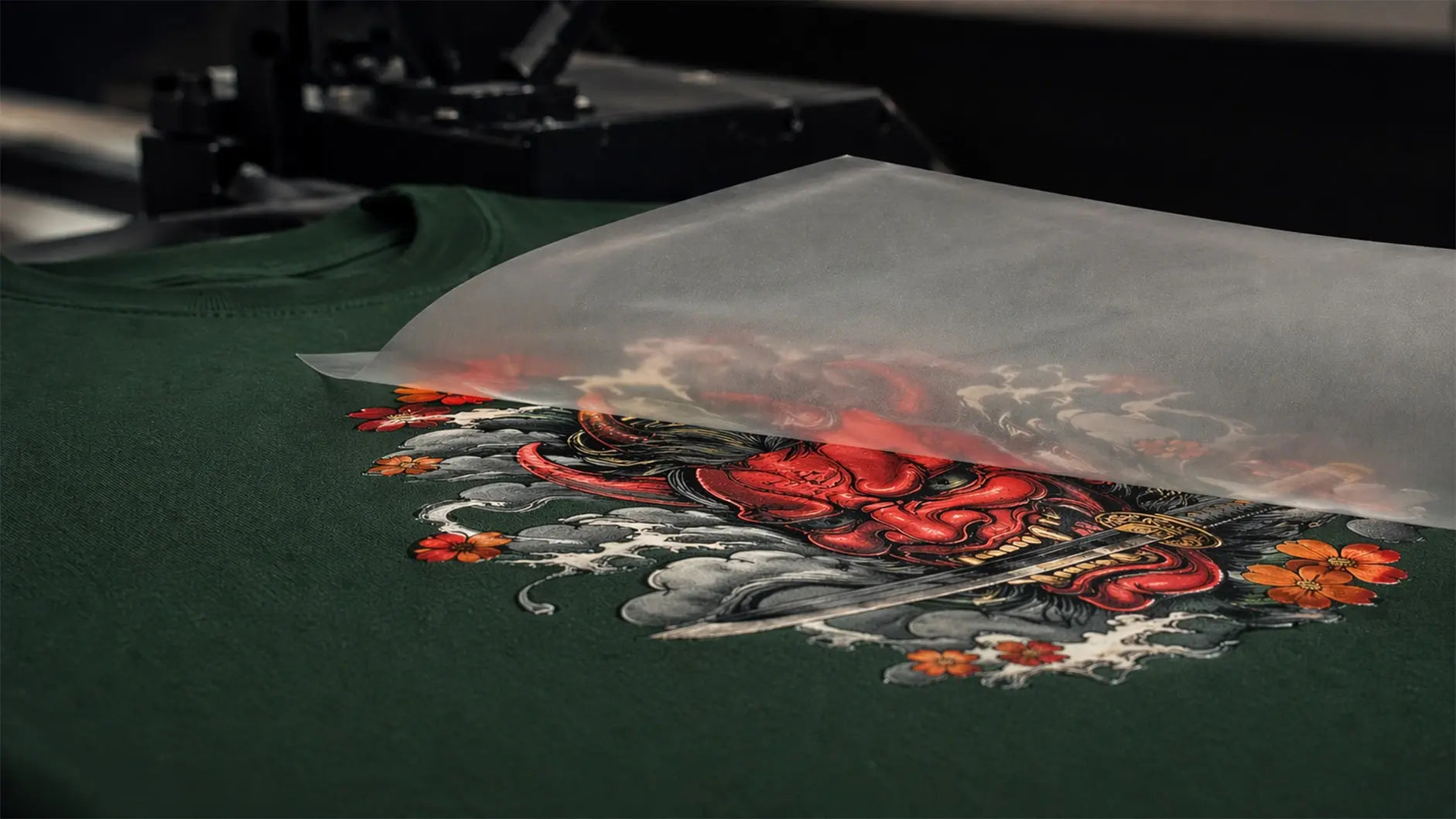
DTF Direct to Film printing is built for designs that need to hit hard, stay bold, and hold their structure over time. Instead of printing directly into the fabric, DTF prints your design onto a specialized film and transfers it onto the garment using heat and pressure.
The result is a vibrant, high-impact print that sits cleanly on top of the fabric with strong color payoff and sharp definition. If your brand is centered around bold graphics, solid colors, or high-contrast visuals, DTF Direct to Film printing delivers a look that stands out immediately.
How DTF Printing Works
DTF printing follows a precise, multi-step process that ensures consistency and durability:
- A digital design is printed onto PET film using specialized inks
- Adhesive powder is applied to the wet ink
- The film is cured to bond the powder
- Heat and pressure transfer the design onto the garment
This process creates a flexible yet durable layer that adheres securely to the fabric.
The Technology Behind DTF Transfers
DTF printers use high-resolution ink systems combined with heat-activated adhesives. This combination allows designs to maintain sharp edges, rich colors, and consistent results across different garments and materials.
Key Benefits of DTF Direct to Film Printing
DTF Direct to Film printing has become a go-to solution for brands that prioritize bold visuals and reliability.
Bold Color and Strong Visual Impact
DTF produces highly saturated colors that pop on both light and dark fabrics. Designs appear vibrant and eye-catching, making them perfect for standout apparel.
Excellent Fabric Versatility
Unlike some methods, DTF works across a wide range of materials, including:
- Cotton
- Polyester
- Blends
- Performance fabrics
This flexibility makes it ideal for brands offering diverse product lines.
Consistent Print Quality
Whether you’re printing one piece or a hundred, DTF maintains consistent quality across every garment. This reliability is essential for scaling your brand.
Why DTF Printing is Ideal for Growing Brands
DTF Direct to Film printing gives brands the freedom to grow without limitations.
Flexible Production Sizes
You can produce small batches or scale up without major cost differences. This makes it perfect for:
- Test drops
- Limited releases
- Bulk production
Reliable Results Across Batches
DTF ensures that every print looks the same, helping maintain brand consistency.
Scalable for Growth
As demand increases, DTF can handle higher volumes while maintaining quality and efficiency.
DTF vs DTG Printing: What’s the Difference?
Understanding the difference between DTF and DTG helps you choose the right method.
Print Feel and Texture
- DTF: Slightly raised, more noticeable texture
- DTG: Soft, embedded into fabric
Color Performance
- DTF: Bold, vibrant colors with strong contrast
- DTG: More natural, softer tones
Use Case Comparison
- Choose DTF for bold graphics and versatility
- Choose DTG for soft feel and premium finishes
Fabric Compatibility and Performance
DTF Direct to Film printing stands out for its adaptability.
Best Materials for DTF
DTF works well on almost any fabric, including synthetic materials that are difficult for other methods.
Performance on Dark and Light Garments
DTF maintains strong color visibility on both dark and light garments, thanks to its opaque ink layer.
Durability and Longevity
DTF prints are designed to last.
How Long DTF Prints Last
With proper care, DTF prints can withstand frequent washing while retaining their color and structure.
Wear and Aging Characteristics
Over time, prints may develop a subtle worn-in look, but they are built to maintain their bold appearance.
Care Instructions for DTF Garments
Proper care ensures long-lasting results.
Washing Guidelines
- Wash inside out
- Use cold water
- Avoid harsh detergents
Drying and Storage Tips
- Air dry when possible
- Avoid high heat
- Store in a cool, dry place
Common Misconceptions About DTF Printing
Is DTF Too Thick?
DTF has a slightly raised feel, but modern techniques keep it flexible and comfortable.
Does DTF Crack or Peel?
When applied correctly and cared for properly, DTF prints are highly durable and resistant to cracking or peeling.
Cost Breakdown of DTF Printing
Setup Costs
DTF has relatively low setup costs compared to traditional methods.
Per-Unit Pricing
Costs vary based on design size and garment type, but DTF remains cost-effective for both small and large runs.
How to Get the Best Results with DTF
Artwork Preparation
- Use high-resolution files (300 DPI)
- Ensure clean edges and strong contrast
- Use transparent backgrounds
Choosing the Right Garments
Select high-quality garments to ensure better adhesion and overall finish.
Environmental Considerations
Ink and Adhesive Use
DTF uses specialized inks and powders that should be handled responsibly.
Waste and Efficiency
DTF minimizes waste by allowing precise, on-demand production.
Conclusion
DTF Direct to Film printing is built for brands that want bold, consistent, and high-impact designs. It offers unmatched versatility across fabrics, strong color performance, and reliable durability that holds up over time.
If your goal is to create apparel that stands out visually and maintains its structure across different garments, DTF Direct to Film printing is a powerful choice. It gives you the flexibility to experiment, scale, and deliver designs that truly represent your brand.
